

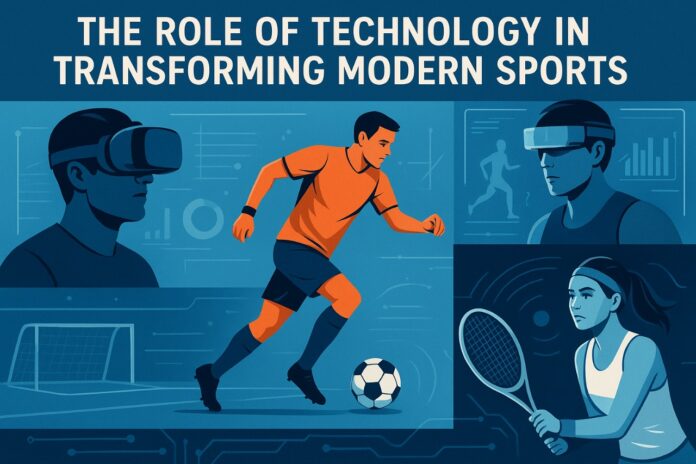
Technology has changed the lives of today, and sports are no exception. Real-time data analytics, advanced wearables, and AI-assisted strategies are some of the many technologies that provide a whole new way for athletes to train, compete as teams, or enjoy their favorite games. Digitization has added dynamism, transparency, and excitement to sports!
Virtual Reality (VR) and Fan Experience
Virtual Reality and Augmented Reality are changing the way fans get to actually interact with sports. Picture yourself putting on your VR headset, sitting courtside at an NBA game, or standing on the sidelines for a football match. Such an immersive experience confuses the line between an observer and a participant.
Since they want to create better fan experiences, sports broadcasters and event organisers are spending huge amounts investing in VR and AR technology. Besides bringing the fans closer to the action, this opens up new ways for sports bodies to generate revenue from support content bought virtually.
- Wearable Technology and Performance Tracking
By virtue of sensors embedded into the wearables, athlete performance monitoring now stands at the highest point of advancement. These gadgets record heart rate, oxygen levels, distance travelled, and even levels of fatigue, with the possibility to fine-tune the training regimen.
Sports scientists use this information to reduce injury and maximize results. For endurance sports, such as cycling and marathon running, these wearables collect essential information and keep athletes regulated for performance throughout the event. Precision dictates training for longevity and consistency, for which every professional reaches.
- Artificial Intelligence and Predictive Insights
Across multiple sporting disciplines, AI has become a transformer. AI systems go through tons of data to formulate predictions: about outcomes or trends in performance or even simulating a scenario for a match. Coaches now use computer-based AI tools for analyzing past data related to player form or match situations.
Beyond the training grounds, AI boosts the fan experience with personalized content, automated highlights, and match analysis in real-time. In so doing, it offers fans an interactive experience ranging from live commentary to AI-assisted game analysis, all tailored to the fans’ own interests.
Data Analytics: The Heart of Modern Strategy
In today’s fiercely competitive sports environment, decisions are no longer based merely on gut instinct or experience. Data analytics are now crucial aspects in strategy formation, player performance tracking, and outcome improvement. Coaches use such tools to check player efficiency, anticipate opponents’ moves, and modify strategies according to game conditions.
For example, real-time statistics about player speed, shot accuracy, and possession percentages in football or basketball are used by teams for better tactical decision-making. Such analysis is pursued to improve their performance and provide the fans with an operator-level understanding of the game, engendering excitement and data-driven commentary for every match.
- Technology and the Business of Sports
Another revolution caused by technology in sports involves the businesses of ticket sales, marketing, sponsorships, and fan engagement. Through social media, live streaming, and digital marketing, sports have attained an international profile while providing fans with conduit to interact with their favorite teams.
These days digital channels are also drifting into related businesses such as fantasy leagues, analytics platforms, and online engagement spaces like Lotus betting, where buzz around data-driven insights and sports trends attract fans who prefer to develop a somewhat analytic connection to the games that they adore.
Conclusion
Such is the expiatory pace that technology unremittingly impinges upon sport as another modern discipline. From increasing the capacities of players, their chart of medicine, and the safety of gymnasium practice to enhancing the engagement of the fans-the technological influence is indisputable. With artificial intelligence, virtual reality, and an ever-tightening analytics environment coming on fast, the sports of tomorrow will be ever-smarter and more immersive, brightly interlinked!