

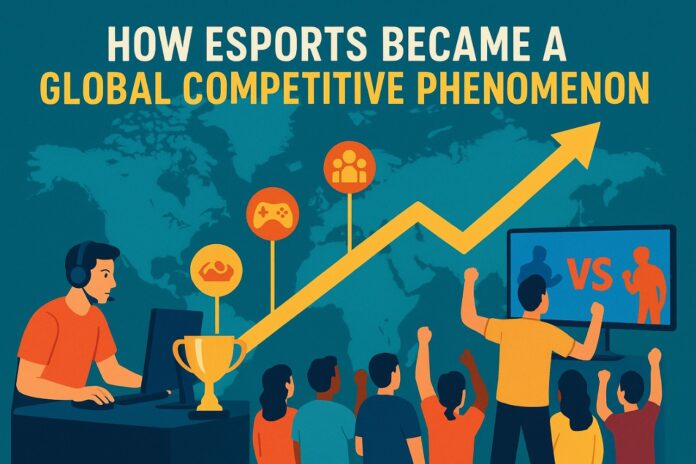
Esports has a world of varying genres, disciplines, and settings-the intricacy and dynamism. Power relations in esports are formed by the performances of whichever player or team from differing organizations compete with each other. With ad revenues in multitudes and some grands-stage tournaments abroad having prize pools amounting to tens of millions of dollars, esports is gradually becoming an acceptable profession.
Having long been dismissed as a game for a few geeks, it swiftly became a lucrative entertainment industry, thereby erecting divides between the entertainment industry of gaming, the technology sector, and the global culture of sports. So if we are to keep talking about the rise in contrapositive terms, it is no longer about the games per se: it is about community, competition, and a new digital economy that seeks to change how we think about sports and bets.
The Rise of Competitive Gaming
Esports has its origin in the late 1990s and early 2000s competitive gaming spheres that had sprung in and around Counter-Strike, StarCraft, and Warcraft III. With the widespread availability of broadband and the creation of streaming platforms such as Twitch and YouTube Gaming, these individuals who would previously compete in isolation now have the whole world as their stage. Now, esports events for League of Legends, Dota 2, and Valorant go head-to-head with traditional sports for viewership in terms of scale and excitement.
Tournaments such as The International and the League of Legends World Championships give out tens of millions as prize money; nowadays, players are celebrities of their own rights; teams are no longer mere commercial ventures; fans who consider these players as any other corporate sports star are a distinct group from those with whom they identify.
The Role of Technology and Accessibility
Accessibility is one of the aspects, which is behind the success of esports. A person with a gaming PC or console or even a mobile device can enter into training centers and take part in the competition. The jump in internet connectivity and availability of streaming platform has democratized entry into the high-level competitive circle. Players from various continents can now inter-competence real-time, thereby rendering itself into a really global affair.
Interaction here has been quickened through streaming platforms; with players doubling as content creators. Fans can watch live games, see the strategy at work, and can interact with the teams through chats and social media. This kind of fan engagement does not exist in traditional sports, making esports a spectator-via-interaction sort of sport.
Betting and the Esports Economy
As esports tournaments rise in fame, a whole parallel market for betting and match predictions has been formed. Similar to traditional sports, esports betting allows fans to place wagers on the outcome of the matchup, team performance, or an individual player’s stats. Through legitimate platforms, odds and analyses are now presented with great detail for many tournaments in the world of CS2, Valorant, and Dota 2 alike.
The lure, in fact, emerges from the scientific character of esports: every single action on a map can be measured, whether it be accuracy rate or reaction time. Hence, this phenomenon gives rise to a more precise odds-setting followed by deeper fan engagement from those fans who love staring into analyzing team synergy. Responsible betting could help generate an aura of excitement for the viewers who witness the whole drama unravel across their screens in high-stake matches.
In case someone wants to really go deep into the eternal worlds of betting on esports and tracking events, having a trusted platform and verified credentials such as a Reddy Anna Book ID guarantees that the party shall be safe and reliable odds and expert opinions shall stand available to the bettors. These sorts of mechanisms can promote transparency and trust in an industry that still evolves and formalizes worldwide.
The Future of Esports
Esports shows no signs of slowing down. With global brands investing in the sport along with media networks and even governments, the industry’s trajectory points toward greater professionalization and integration into the mainstream. Certain universities now provide esports scholarships, and large sports authorities are setting up their own gaming divisions.
The presence of VR, AI-powered analytics, and 5G connectivity will further enhance gameplay and viewing experiences. This will make esports even more immersive and accessible. Whether you are a casual fan, professional player, or value-based bettor, esports is filled with opportunities to connect, compete, and celebrate the spirit of global gaming.